

Fire Sprinkler Regulations in the UK

Fire sprinkler regulations in the UK are designed to ensure that buildings are protected with a reliable and compliant fire suppression system. Requirements vary depending on building type, height, use, occupancy and risk level. At GFS, we design, install and maintain fire sprinkler systems that meet all relevant national standards and local authority requirements.

When Sprinklers Are Required

Sprinklers are required or strongly recommended in several situations, including:

  • New-build residential blocks over 11 metres

  • Care homes, sheltered housing and extra-care facilities

  • Certain commercial or high-risk buildings

  • Large HMOs and multi-occupancy properties

  • Properties with protected escape routes or vulnerable occupants

Each local authority or building control officer may also apply additional requirements depending on fire strategy, design layout or specific building conditions.

Regulations that apply to Fire Sprinkler Systems

Fire sprinkler systems fall under a range of statutory and regulatory frameworks, including:

  • Building Regulations Part B
    Covers fire safety in dwellings and non-domestic buildings, including where sprinkler systems must be installed.

  • Approved Document B (ADB)
    Provides guidance on when sprinklers are required and how they should be integrated into building design.

  • BS 9251 and BS EN 12845
    The two main standards governing design, installation and maintenance depending on building type.

  • Local fire authority and building control requirements
    Sometimes additional criteria are applied to support the fire strategy.

At GFS, all sprinkler systems are designed and installed in full compliance with current UK fire safety legislation and the relevant BS standards.
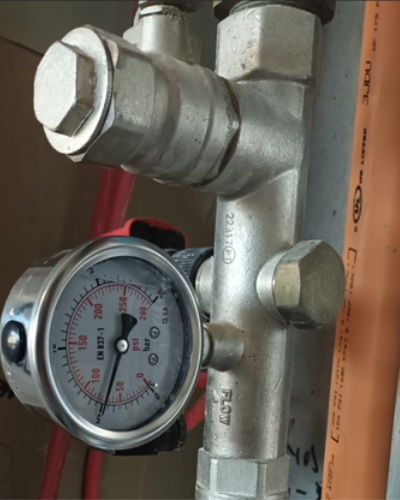
Fire Sprinkler Regulations equipment

Working With a Compliant Fire Sprinkler Contractor

Using a contractor who understands the fire sprinkler system regulations ensures your fire sprinkler system is correctly designed, fully compliant and accepted by building control. Our team works across the UK with homeowners, developers and commercial clients to deliver compliant systems that meet all statutory obligations.

Fire Sprinkler system Design & Installation
In the UK, fire safety is primarily governed by the Regulatory Reform (Fire Safety) Order 2005, which has been significantly tightened by the Fire Safety Act 2021 and the Building Safety Act 2022. These laws apply to almost all non-domestic premises, including workplaces, commercial buildings, and the communal areas of multi-occupied residential buildings like blocks of flats.
 
The central figure in these regulations is the Responsible Person (RP)—typically the employer, building owner, or landlord. The RP has a legal duty to ensure the building meets safety standards. As of October 2023, a major update requires all RPs to record their fire risk assessment in full, regardless of the size of the business or the number of employees. This assessment must identify potential hazards, evaluate people at risk, and outline specific measures to mitigate those risks.

For residential buildings, the Fire Safety (England) Regulations 2022 introduced stricter tiers of responsibility based on building height. In all multi-occupied buildings, RPs must provide residents with clear fire safety instructions and information regarding the importance of fire doors. For buildings over 11 metres, there is a mandatory requirement to perform quarterly checks on communal fire doors and annual checks on individual flat entrance doors.

In high-rise buildings (18 metres or 7 storeys and above), the requirements are even more stringent. RPs must install “secure information boxes” containing building floor plans and contact details for the Fire and Rescue Service. They must also provide wayfinding signage that is visible in smoky conditions and conduct monthly checks on firefighting lifts and other essential equipment.

Recent updates to Approved Document B (the guidance for building regulations) have also introduced new standards for new builds, such as the mandatory installation of sprinklers in all new care homes. Furthermore, the UK is currently transitioning away from older national testing standards in favour of the more rigorous European “BS EN” standards to ensure materials, such as cladding and insulation, meet modern safety benchmarks.

Failure to comply with these regulations is a serious matter. Local Fire and Rescue Authorities carry out inspections, and non-compliance can result in enforcement notices, unlimited fines, or even imprisonment for major offences. The focus remains on proactive prevention, clear communication with occupants, and maintaining a robust paper trail of safety checks.

Head Office

GFS Limited

33 Thorne Road

Doncaster 

DN1 2HD

01427 38 48 70

07503 092 531

projects@gfs........co.uk

About Us

FAQ's

01427 38 48 70

07503 092 531

T: 01427 38 48 70

M: 07503 092 531

All rights reserved. GFS Doncaster Limited